

As computing power grows, so does the heat it produces. Today’s data centers are pushing the limits of what traditional air cooling can handle. High-density racks filled with graphics processing units (GPUs), CPUs, and AI accelerators can generate several kilowatts of heat per rack—far more than conventional air cooling systems were designed to manage.
Data center liquid cooling has emerged as the most effective way to dissipate heat from these dense, high-performance environments. Rather than relying on cold air circulated through aisles and vents, liquid cooling systems use specialized cooling fluids to transfer heat directly away from the heat-generating components of IT equipment. Because liquid has a higher thermal conductivity than air, it can move heat much more efficiently and maintain optimal temperatures even as power densities climb.
The shift toward liquid cooling isn’t just about performance—it’s about sustainability and operational resilience. Liquid-based cooling technologies allow operators to achieve significant energy savings, reduce water usage, and support better power usage effectiveness (PUE) metrics across modern data center infrastructure. They also make it possible to operate in warmer climates or constrained spaces where air cooled data centers struggle to maintain efficiency.
This guide explores the leading liquid cooling solutions in use today—rear door heat exchangers, direct-to-chip cooling, and immersion cooling—and provides a practical roadmap for implementation. Along the way, we’ll examine energy efficiency benefits, integration challenges, and key considerations for data center operators looking to modernize their cooling systems.
Whether you’re building a new cooled data center from the ground up or upgrading existing air cooling infrastructure, understanding these systems will help you plan for the next generation of high-density computing and thermal management.
Liquid Cooling Systems in Modern Data Centers: How They Work and When to Use Them

As data centers evolve, liquid cooling systems are becoming essential for handling the heat output of modern data center infrastructure. These liquid cooling technologies move beyond air-based systems, circulating cooling fluid through specialized pathways that make contact with or surround heat-producing components. The result is more efficient cooling, lower energy consumption, and the ability to support denser workloads in the same footprint.
The three primary approaches used today—rear-door heat exchangers, direct-to-chip cooling, and immersion cooling—each have their strengths. The right choice depends on your data center operations, available water consumption tolerance, and future growth trajectory.
Rear-Door Heat Exchangers: Bridging Air-Cooled and Liquid-Cooled Data Centers
For many operators, rear-door heat exchangers (RDHx) offer a practical step toward liquid cooling solutions without abandoning their existing air cooling infrastructure. RDHx units replace or attach to the back doors of server racks, using coils filled with cooling fluid to transfer heat from the hot air leaving the equipment.
As hot air exits the rack, it passes through the liquid-cooled door where a heat exchanger absorbs and removes the heat before the air reenters the room. This method keeps aisle temperatures stable and eliminates the need for large-scale air conditioning upgrades.
RDHx systems typically handle rack densities up to 40–50 kW and integrate smoothly into air cooled data centers. They can reduce energy usage and enable partial or full free cooling when ambient conditions allow. For data center operators seeking significant energy savings without a full mechanical overhaul, RDHx provides a bridge between legacy air cooling and next-generation liquid cooling.
Direct-to-Chip Cooling: Precision Thermal Management for High-Density Racks
When rack power densities rise beyond what air can manage, direct-to-chip cooling becomes a compelling option. In this setup, cold plates are mounted directly onto CPUs, GPUs, and other heat-generating components. A liquid coolant circulates through the plates, absorbing and carrying away heat via a coolant distribution unit (CDU) that regulates flow and temperature.
This direct-to-chip approach delivers targeted cooling exactly where it’s needed—at the silicon level—allowing data center operators to maintain optimal temperatures even under intense computational loads. It’s a closed-loop system, meaning cooling water or non-conductive liquid is contained and recirculated, minimizing water usage and risk.
Because the heat transfer occurs so close to the source, energy efficiency improves substantially, and the system can integrate with free cooling or hybrid technologies that leverage ambient air for additional gains. For facilities supporting high-density computing or artificial intelligence workloads, direct-to-chip cooling can enable significant energy savings while keeping systems within precise thermal limits.
Immersion Cooling: The Deep End of Liquid Cooling Innovation
At the cutting edge of liquid cooling technologies is immersion cooling, where entire servers—or server boards—are submerged in dielectric fluids designed to safely dissipate heat without conducting electricity.
There are two main variants:
- Single-phase immersion, in which the cooling fluid absorbs heat and circulates through a heat exchanger for re-cooling.
- Two-phase immersion, where the fluid boils upon contact with hot components, then condenses and recycles within a closed loop.
Immersion cooling offers exceptional thermal management and can reduce energy consumption by 30–40 percent compared with air cooling systems. It virtually eliminates air conditioning, cold aisle containment, and other air-based systems, freeing valuable floor space and simplifying data center operations.
While the approach requires careful consideration of system components, servicing, and fluid handling, it delivers unparalleled energy efficiency and scalability for modern data centers pushing into extreme densities.
Retrofitting vs. New-Build Liquid Cooling Systems for Data Centers
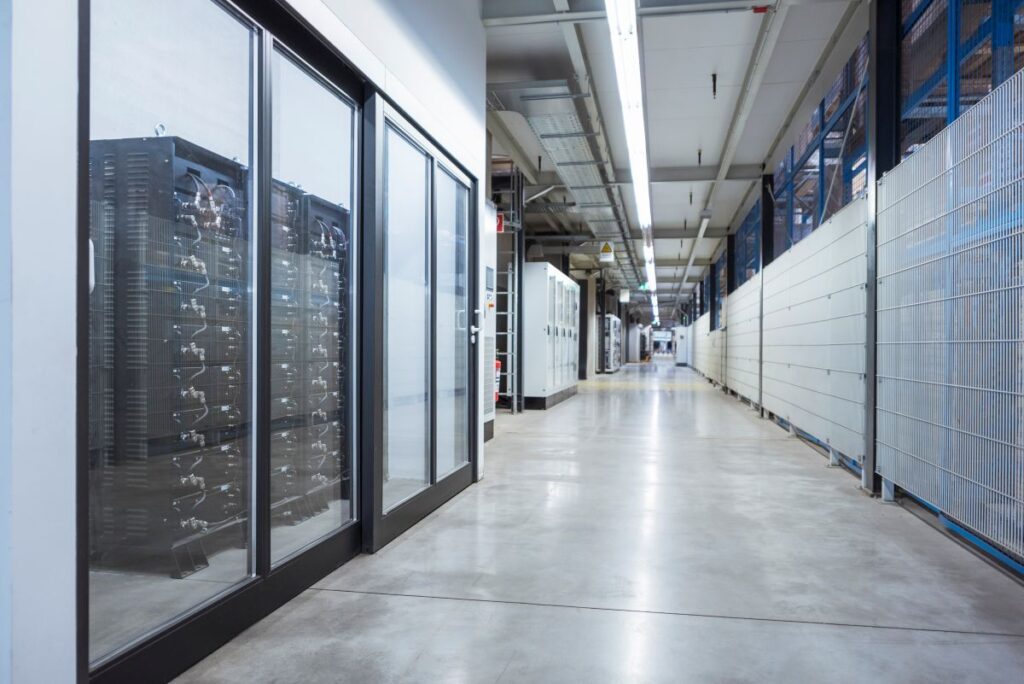
Not every organization has the luxury of building a cooled data center from the ground up. For many data center operators, the question isn’t whether to adopt liquid cooling systems, but how—and whether retrofitting existing facilities or investing in a new build makes the most sense.
Each path offers distinct benefits and trade-offs in cost, complexity, and performance. Understanding these differences is critical for aligning your data center cooling strategy with long-term operational and financial goals.
Retrofitting Existing Air-Cooled Data Centers
Retrofitting allows operators to modernize air cooled data centers incrementally while keeping existing IT equipment online. This hybrid approach blends air cooling systems with liquid cooling solutions such as rear door heat exchangers or limited direct-to-chip cooling zones.
The key advantage is lower disruption and capital expenditure. Facilities can begin reducing energy consumption and improving heat transfer efficiency without redesigning their data center infrastructure. RDHx units, for example, can be added rack by rack, removing hot spots and enhancing overall energy efficiency.
However, retrofits require careful planning to ensure compatibility between air cooling infrastructure and liquid cooled racks. Factors like coolant distribution unit placement, piping routes, and cooling tower integration must be considered early to prevent operational bottlenecks. Additionally, operators must address water usage, leak detection, and maintenance access within spaces not originally designed for liquid cooling technologies.
For facilities nearing capacity or facing rapid expansion, retrofits offer a manageable first step into hybrid technologies—balancing innovation with practicality.
Designing New-Build Liquid-Cooled Data Centers
For organizations planning new facilities, designing with liquid cooling in mind from day one opens the door to significant energy savings and long-term flexibility. A new build allows for optimized coolant distribution, direct integration of liquid cooling systems with building thermal management infrastructure, and reduced dependency on air conditioning and evaporative cooling systems.
By incorporating liquid cooling technologies from the outset, engineers can eliminate redundant air-based systems, simplify airflow management, and minimize water consumption. New builds also make it easier to integrate renewable energy sources and reclaim waste heat for nearby operations—improving overall data center energy sustainability.
While upfront costs may be higher, purpose-built liquid cooled racks, closed-loop piping systems, and optimized heat exchangers result in lower operational costs, reduced energy usage, and superior scalability for modern data centers running high-density computing workloads.
Choosing the Right Path for Your Data Center Operations
When deciding between retrofit and new-build strategies, consider:
- Current density and future growth – Will workloads like artificial intelligence or machine learning demand higher heat dissipation soon?
- Physical constraints – Is there enough room for piping, CDUs, and cooling units?
- Budget and timeline – Can upgrades be phased in over time, or is a full rebuild more cost-effective long term?
- Sustainability goals – Are you targeting reduced water consumption or improved energy efficiency?
The right path depends on your facility’s stage in its lifecycle, but both retrofit and new-build approaches can deliver meaningful energy savings, extend equipment longevity, and ensure consistent thermal management as data centers grow.
Commissioning and Controls: Managing Liquid Cooling Systems for Reliable Operation
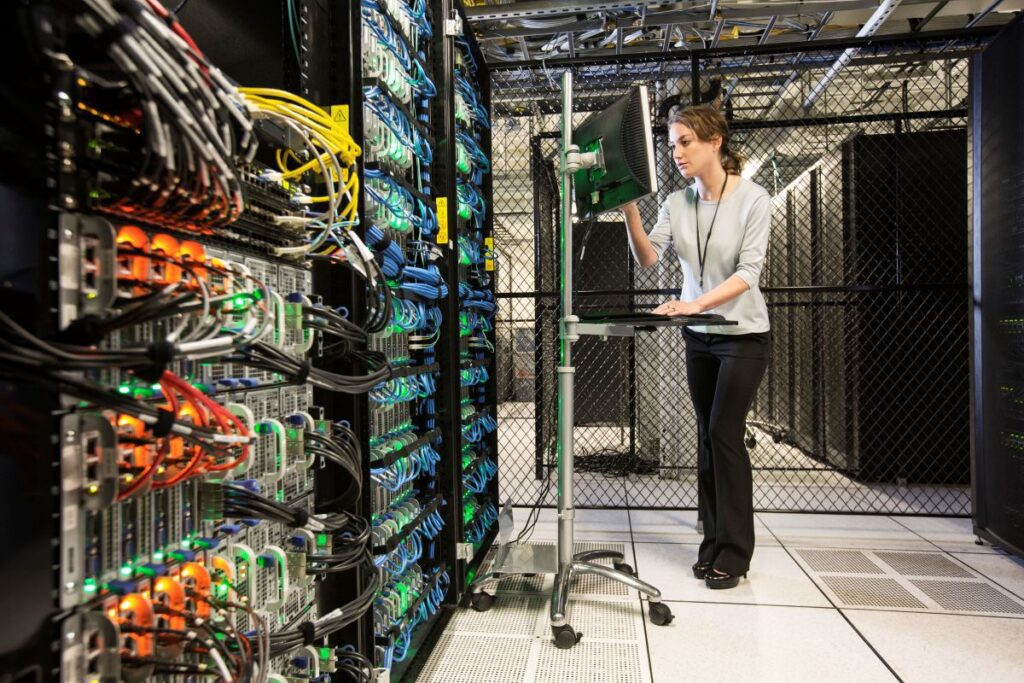
Installing a liquid cooling system is only the beginning. For data center operators, achieving true reliability and efficiency requires careful commissioning, continuous monitoring, and intelligent control integration. In many cases, the difference between a highly efficient cooling system and a costly maintenance challenge lies in how well these processes are managed.
Commissioning ensures that every cooling system component—from coolant distribution units (CDUs) and heat exchangers to pumps, sensors, and control valves—performs as intended. This step validates flow rates, pressure levels, and temperature differentials, confirming that the system will transfer heat effectively while maintaining optimal temperatures across IT loads.
Smart Controls and Automation
Modern liquid cooling technologies rely on integrated thermal management controls that automatically balance cooling fluid flow and temperature based on heat load. These controls communicate with data center infrastructure management (DCIM) or building management systems (BMS) to coordinate with fans, cooling towers, and free cooling units when available.
For instance, when ambient air temperature drops, the system may switch to free cooling, circulating fluid through external heat exchangers to reduce energy usage. In warm or high-density environments, coolant distribution units adjust flow dynamically to keep heat-generating components stable without overcooling or wasting energy.
Properly tuned, these automation systems lead to significant energy savings and improved energy efficiency, ensuring the data center remains within its desired power usage effectiveness (PUE) targets.
Leak Detection, Containment, and Safety
Because liquid cooling introduces fluid into the data hall, robust leak detection and containment strategies are non-negotiable.
Sensors should be installed along critical system components, around CDUs, and under liquid cooled racks to identify issues early. Closed-loop architectures significantly reduce leak risks, but proactive design—such as drip trays, secondary containment, and non-conductive liquids—adds essential layers of protection.
In addition, operators should integrate leak alarms into their data center operations dashboards, enabling instant visibility and fast response. Regular maintenance cycles and fluid testing ensure that the cooling water or dielectric fluid remains within quality tolerances for corrosion, contamination, or microbial buildup.
Performance Verification and Ongoing Monitoring
After commissioning, continuous performance monitoring helps maintain efficiency and extend system lifespan. Operators should track metrics such as:
- Inlet and outlet temperatures for each rack
- Flow rate and pressure differentials
- Energy consumption of CDUs and pump systems
- Return temperature of the cooling fluid
By comparing real-time data against design benchmarks, teams can identify degraded heat transfer performance, control drift, or fluid loss before they impact uptime.
Integrating predictive analytics or machine-learning tools further enhances system reliability—especially as data centers scale or adopt hybrid technologies mixing air cooling and liquid cooling solutions.
When properly commissioned and managed, liquid cooling systems become one of the most stable and sustainable parts of a data center’s thermal management strategy—enabling consistent performance and uptime even under high-density, high-demand workloads.
Water Treatment, Cooling Fluid Quality, and Serviceability

The long-term reliability of any liquid cooling system depends on the health of its cooling fluid and the ease with which it can be serviced. Unlike air cooling systems, which primarily rely on filters and airflow management, liquid cooling technologies introduce new maintenance dimensions—fluid chemistry, material compatibility, and component access. If neglected, these factors can lead to corrosion, contamination, and reduced heat transfer efficiency over time.
Water Quality and Treatment Considerations
In systems using water as the primary coolant, maintaining proper chemical balance is critical. Operators must control pH, hardness, and microbial growth to prevent scaling or biological fouling that can restrict flow and increase energy consumption. Regular water analysis and treatment with corrosion inhibitors or biocides are essential for sustaining long-term performance.
Many facilities are now integrating closed-loop cooling designs to minimize water consumption and contamination risk. In these systems, cooling water is continuously filtered and recirculated, ensuring consistent purity while reducing dependency on external sources. The result is improved reliability and reduced energy usage across the entire data center infrastructure.
Alternative Coolants and Dielectric Fluids
Some data center operators opt for non-conductive liquids or dielectric fluids as alternatives to water-based coolants. These fluids are used extensively in immersion cooling and direct-to-chip cooling setups because they can safely surround sensitive IT equipment without risk of electrical shorting.
Selecting the right liquid coolant involves balancing thermal capacity, viscosity, and environmental impact. Synthetic hydrocarbons and engineered fluorocarbons offer excellent thermal management properties, though disposal and sustainability factors must be evaluated carefully. As modern data centers move toward eco-conscious design, biodegradable and low-water-usage fluids are becoming increasingly popular.
Leak Detection, Monitoring, and Containment
Even with robust cooling systems, leaks can occur—especially in retrofitted air cooled data centers where piping and fittings weren’t designed for liquid. Proactive leak management protects not only your data center operations but also your investment in infrastructure.
Strategies include:
- Continuous leak detection sensors installed near coolant distribution units, pumps, and manifolds
- Secondary containment trays beneath racks and equipment
- Automated fluid shutoff valves linked to the building management system
These measures help mitigate risk while maintaining uptime for critical data center cooling processes.
Ease of Service and Maintainability
One of the key differences between air cooling and liquid cooling systems lies in serviceability. Air-based systems can often be serviced while operational, but liquid cooling requires careful planning to avoid downtime during maintenance.
To simplify this, leading liquid cooling solutions use modular system designs that isolate racks or sections of piping. Quick-connect couplings, heat exchanger bypass loops, and coolant distribution unit isolation valves make it possible to service individual components without affecting the rest of the environment.
Routine inspections of system components, fluid condition, and pump performance should be part of standard data center operations to maintain both safety and energy efficiency over time.
When executed correctly, water treatment, fluid monitoring, and maintenance protocols ensure that liquid cooling technologies deliver their full promise—efficient cooling, reliability, and reduced environmental impact throughout the lifecycle of your cooled data center.
Impact on Energy Consumption, Uptime, and Performance Roadmaps
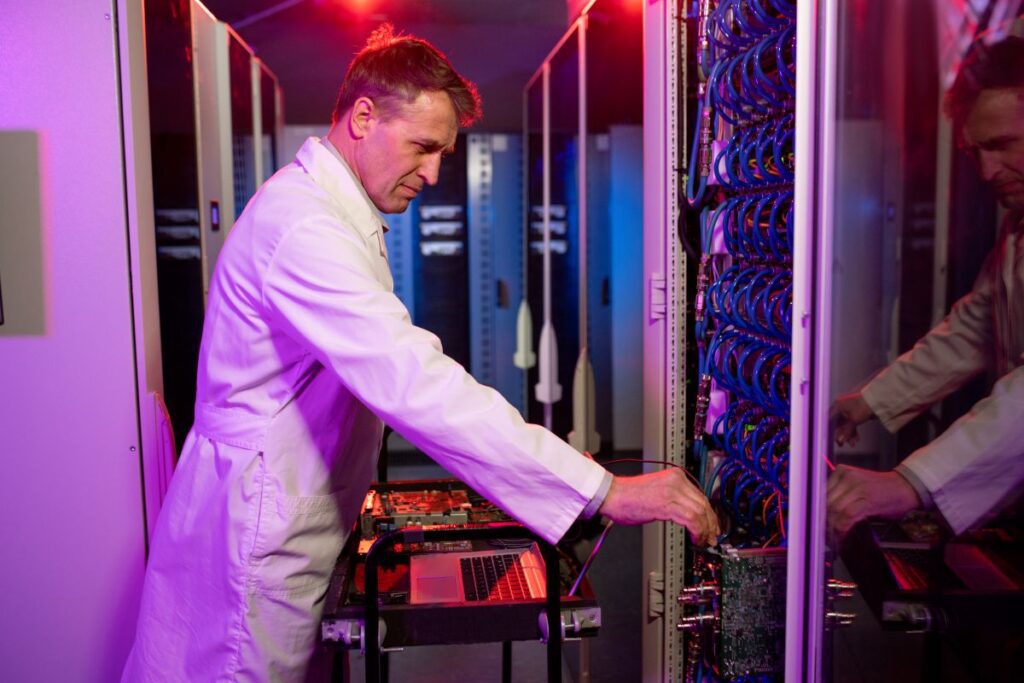
Adopting data center liquid cooling systems can transform both operational efficiency and long-term performance planning. Beyond lowering energy consumption, liquid cooling improves uptime, stabilizes thermal management, and allows organizations to scale into higher computing densities without increasing their energy footprint.
Unlike air cooling systems, which require extensive air conditioning, cold aisle containment, and fan power, liquid-based cooling technologies directly remove heat from heat-generating components, improving energy efficiency and supporting future-ready designs for modern data centers.
Reduced Energy Consumption and Operating Costs
Liquid cooling enables more efficient cooling by taking advantage of water’s superior heat transfer properties compared to air. This means less energy is required to maintain optimal temperatures, resulting in measurable cost and sustainability benefits.
Key energy-saving impacts include:
- Lower fan power: Reduced reliance on air cooled data pathways decreases fan usage across racks and CRAC units.
- Reduced compressor operation: Free cooling and cooling tower integration eliminate much of the mechanical refrigeration load.
- Improved Power Usage Effectiveness (PUE): Many facilities achieve PUE values under 1.2 with well-tuned liquid cooling solutions.
- Less water evaporation: Closed-loop systems cut water consumption compared with evaporative cooling and air conditioning-heavy environments.
- Significant energy savings: Facilities report up to 40% reduction in total data center energy usage after switching from air-based systems.
These improvements support corporate sustainability goals while ensuring data center operators can achieve higher performance within the same electrical envelope.
Enhanced Uptime and Reliability
Reliability is one of the most important benefits of liquid cooling technologies. By maintaining consistent thermal management, liquid-cooled systems help prevent heat-induced component failures and unplanned downtime.
Uptime advantages include:
- Stable temperatures: Direct contact with cooling fluid keeps chips and graphics processing units (GPUs) within safe thresholds, even under heavy loads.
- Fewer thermal hotspots: Liquid systems distribute cooling evenly, avoiding the uneven airflow problems common in air cooled data centers.
- Lower mechanical strain: With less reliance on fans and chillers, there’s reduced vibration and fewer moving parts to fail.
- Automated fail-safes: Integrated sensors, CDUs, and control loops continuously monitor system conditions for quick response to anomalies.
When properly managed, liquid cooling systems operate quietly, predictably, and with fewer single points of failure—ideal for mission-critical applications in healthcare, research, and AI workloads.
Supporting High-Density Performance and Future Growth
As data centers grow and support more high-density computing, liquid cooling makes it possible to deploy advanced workloads without expanding physical infrastructure.
Strategic benefits include:
- Same footprint, more power: Facilities can host double or triple the compute density in the same rack footprint.
- Scalable system components: Modular CDUs and heat exchangers allow stepwise expansion as heat load increases.
- Flexible integration: Hybrid technologies combining direct-to-chip cooling and immersion cooling can evolve alongside hardware refresh cycles.
- Sustainability alignment: Reduced energy usage, lower water stress, and compatibility with renewable energy sources support ESG targets.
- Predictable planning: With improved thermal stability, operators can project data center infrastructure needs and energy budgets years in advance.
By improving both efficiency and scalability, liquid cooling sets a foundation for sustainable growth in the data center industry—especially as artificial intelligence and edge computing continue to drive thermal demands.
In short:
Liquid cooling systems not only reduce energy consumption but also strengthen operational resilience, extend equipment life, and provide a clear roadmap for future expansion. The result is a smarter, more energy-efficient data center prepared for the demands of next-generation workloads.
Selecting the Right Liquid Cooling Strategy for Your Data Center Operators
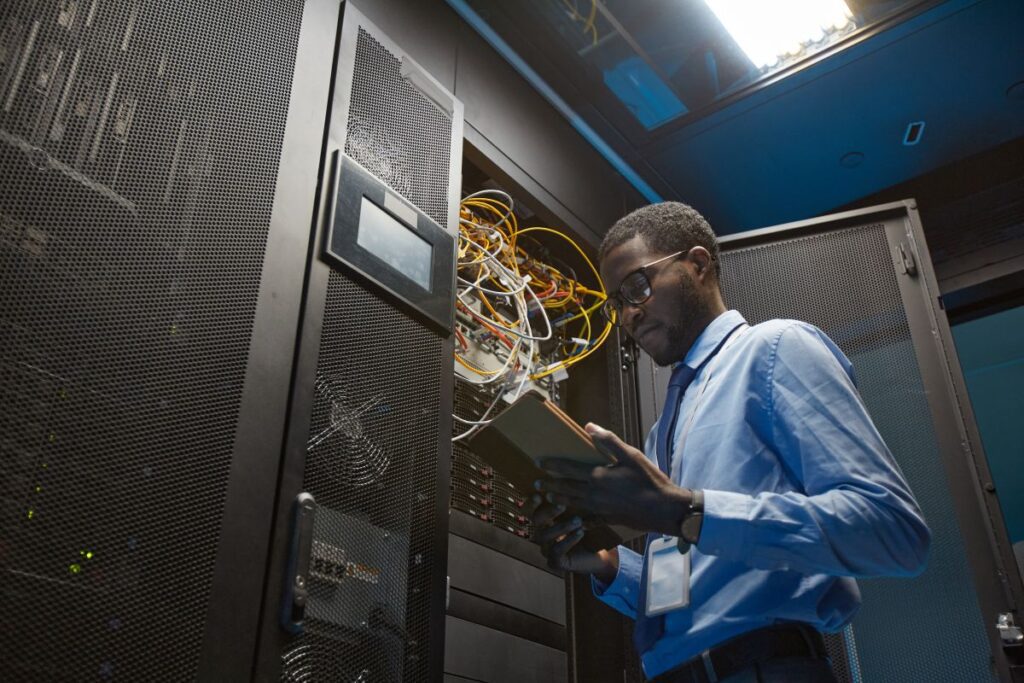
With several liquid cooling systems available—each suited to different workloads, budgets, and operational goals—choosing the right strategy requires balancing performance, cost, and long-term flexibility. For data center operators, the decision isn’t about finding the single “best” technology, but identifying which liquid cooling solution aligns with their constraints around power usage, water consumption, space, and growth.
Below is a practical framework to help determine the right fit for your data center operations.
Key Factors to Consider When Choosing a Cooling Strategy
Before committing to a system design, evaluate the following variables that influence both short- and long-term outcomes:
- Power Density & Heat Load
- Low to medium (<30 kW/rack): Consider rear door heat exchangers or hybrid air-liquid systems.
- High-density (30–80 kW/rack): Direct-to-chip cooling provides precise thermal management with minimal retrofitting.
- Ultra-dense (>80 kW/rack): Immersion cooling is typically most effective for extreme heat-generating components like GPUs and AI clusters.
- Space and Infrastructure Constraints
- Limited space favors compact, rack-level coolant distribution units and hybrid approaches.
- Greenfield builds can optimize room layouts and piping routes for dedicated liquid cooling technologies.
- Water and Energy Efficiency Goals
- If reducing water consumption is a priority, select closed-loop or dielectric fluid-based systems.
- For minimizing energy consumption, prioritize direct-to-chip cooling with automated control integration and potential free cooling support.
- Maintenance and Serviceability
- Retrofitted air cooled data centers should plan for easy service access and isolation valves.
- Modular system designs make it easier to maintain uptime during routine cooling fluid or equipment servicing.
- Growth and Scalability
- Facilities anticipating rapid expansion or adoption of high-density computing should favor solutions with modular CDUs and heat exchangers that can scale.
- Choose systems that align with evolving sustainability standards and renewable energy sources to ensure long-term viability.
Decision Matrix: Matching Cooling Type to Facility Needs
| Cooling Method | Ideal Use Case | Advantages | Key Considerations |
| Rear-Door Heat Exchangers | Retrofit for mixed air/liquid environments | Low disruption, lower capex, compatible with existing systems | Moderate density only, requires room for piping |
| Direct-to-Chip Cooling | High-density compute, AI/ML workloads | High energy efficiency, scalable, minimal water use | Higher integration complexity |
| Immersion Cooling | Extreme density or greenfield sites | Maximum heat transfer and energy savings, silent operation | Specialized maintenance and design changes |
This simple framework can guide planning conversations and help data center operators identify where the biggest performance and sustainability gains can be achieved.
Practical Example: Blended Cooling Approach
Many modern facilities now use hybrid designs that combine multiple cooling systems to optimize efficiency.
For example:
- Rear-door heat exchangers handle traditional racks.
- Direct-to-chip cooling supports AI or research clusters.
- Immersion cooling serves high-density lab or HPC environments.
This targeted cooling model allows operators to achieve significant energy savings while maintaining flexibility across workloads—all within the same data center footprint.
Planning for the Future
Your cooling strategy should evolve alongside your technology roadmap. As data centers grow, equipment densities rise, and sustainability regulations tighten, being able to pivot between systems—or enhance existing ones with hybrid technologies—will be a competitive advantage.
A well-designed liquid cooling strategy is not only about managing heat generated today—it’s about preparing your data center infrastructure for the thermal and environmental realities of tomorrow.
The Future of Cooled Data Centers: Sustainability and Innovation Ahead

The future of data center cooling is being defined by a convergence of sustainability, performance, and design innovation. As the data center industry continues to expand—with rising energy consumption driven by AI, analytics, and cloud computing—operators are under increasing pressure to reduce environmental impact without compromising uptime or performance.
Next-generation liquid cooling technologies are paving the way for a more sustainable and resilient infrastructure, focusing on zero-water designs, advanced thermal management, and energy reuse.
1. Zero-Water and Closed-Loop Cooling Systems
Companies like Microsoft and Meta are leading a shift toward zero-water cooling—systems that operate entirely within a closed loop to eliminate water consumption from traditional evaporative or cooling tower-based systems.
Key advantages:
- Eliminates water stress: Supports data centers in drought-prone regions.
- Reduces maintenance: No need for chemical water treatment or filtration.
- Improves efficiency: Retains cooling capacity through sealed fluid circulation.
- Sustainability alignment: Helps meet ESG and carbon-reduction targets.
In these setups, liquid coolant continuously circulates through cold plates or immersion baths, transferring heat to secondary loops that can reject it to ambient air or renewable energy sources such as geothermal or district heating networks.
2. Advanced Coolants and Fluid Engineering
Future liquid cooling systems are evolving with better cooling fluids designed to offer superior heat transfer and lower environmental impact.
Innovations include:
- Dielectric fluids with higher boiling points for improved immersion cooling stability.
- Biodegradable liquids that reduce lifecycle disposal costs.
- Nanofluid technologies that increase thermal conductivity for more efficient cooling.
- Smart coolant additives that detect contamination and adjust chemistry automatically.
These advances not only increase energy efficiency but also extend the service life of both IT hardware and the cooling systems themselves.
3. Heat Recovery and Energy Reuse
As data centers aim for carbon neutrality, the waste heat from liquid cooling systems is becoming a valuable resource. Future-ready facilities are exploring ways to transfer heat back into nearby infrastructure:
- District heating loops that warm local buildings.
- Industrial reuse in greenhouses or manufacturing processes.
- Thermoelectric conversion for producing additional electricity.
This approach turns heat generated by computing into a renewable energy opportunity, further reducing energy consumption at a community or regional scale.
4. AI-Driven Cooling Optimization
As artificial intelligence continues to reshape the industry, it’s also transforming how data centers are managed.
Machine-learning models can now analyze energy usage, ambient air conditions, and server loads in real time to optimize cooling unit performance automatically.
Benefits include:
- Predictive maintenance for pumps, CDUs, and heat exchangers.
- Dynamic fluid flow control to match changing workloads.
- Automated PUE optimization for consistent energy savings.
- Continuous feedback loops improving system longevity and efficiency.
AI integration ensures cooling becomes not just reactive but anticipatory—adjusting before problems arise and continually refining performance through data.
5. Modular and Distributed Cooling Infrastructure
Finally, as data centers grow in scale and complexity, the architecture of cooling systems is becoming more modular. Rather than relying on centralized chillers, next-gen facilities are adopting distributed liquid cooling units that can be deployed at the rack, row, or container level.
Advantages include:
- Easier scalability for edge and micro data centers.
- Reduced single points of failure.
- Faster installation and maintenance.
- Adaptability for hybrid technologies blending air cooling and liquid systems.
These modular approaches make it easier for data center operators to deploy high-performance liquid cooling technologies in varied environments—from hyperscale facilities to edge deployments.
In the years ahead, liquid cooling will no longer be a specialty option—it will be a foundational pillar of data center infrastructure design. By embracing closed-loop sustainability, intelligent automation, and modular scalability, the cooled data centers of the future will operate more efficiently, reliably, and responsibly than ever before.
Why Partner with Ambient Enterprises
Ambient Enterprises brings together a national collective of HVAC design and implementation experts dedicated to building reliable, efficient, and sustainable cooling environments. Our team understands the critical balance between innovation, uptime, and cost control—especially across sectors where reliability is non-negotiable, including:
- Healthcare and life sciences facilities
- Commercial and institutional campuses
- Data centers and mission-critical environments
We help organizations design, implement, and maintain liquid cooling technologies tailored to their infrastructure, ensuring every system—from direct-to-chip cooling to immersion cooling—operates safely, efficiently, and in alignment with long-term energy and environmental goals. Let’s discuss your project needs.